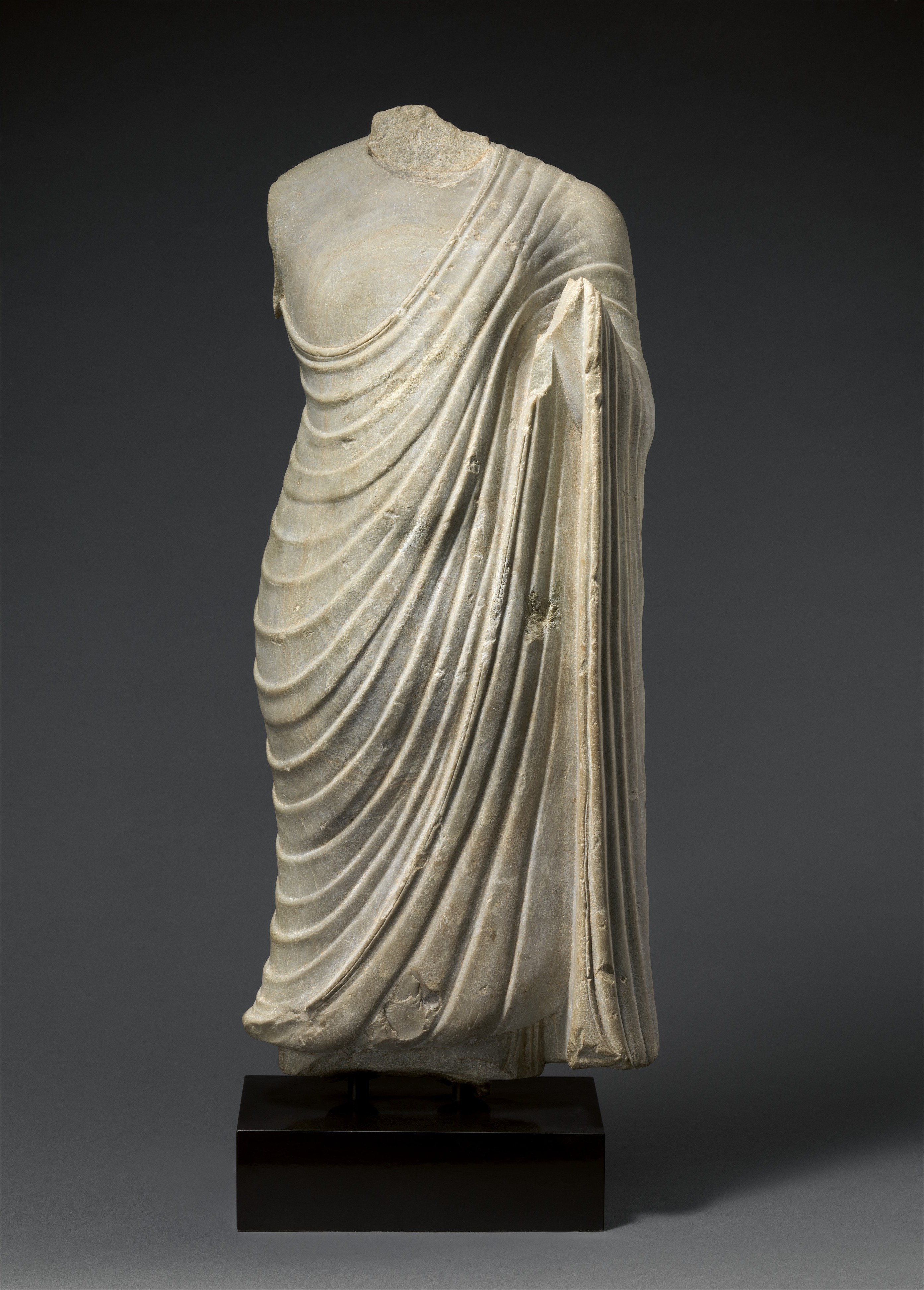
Buda, torso de caliza con túnica drapeada (siglo III d. C.)
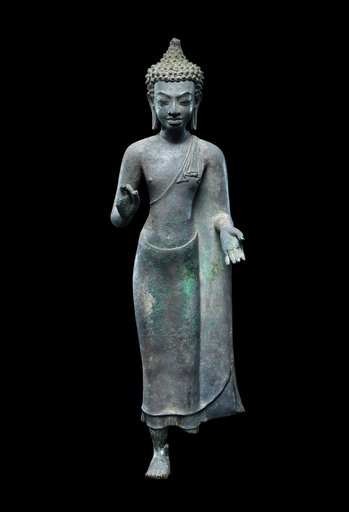
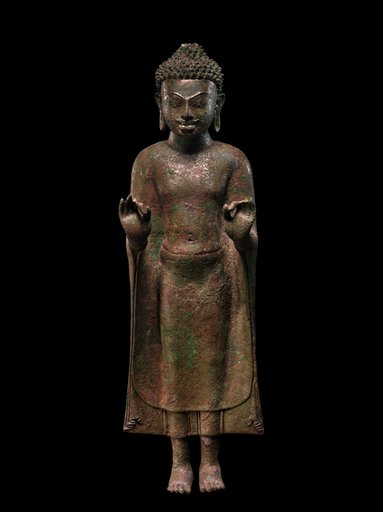
Torso sin cabeza de una figura de pie, tallado en caliza, cubierto por una túnica fina con pliegues paralelos y muy juntos que caen en curvas desde el hombro izquierdo. La escultura descansa sobre una base rectangular oscura contra un fondo gris, que realza el relieve del drapeado.
- Artista
- Desconocido
- Fecha
- 3rd century CE
- Técnica
- Limestone
- Fuente
- The Metropolitan Museum of Art
- Tamaño
- 2785 × 3887 px
Dominio público · The Metropolitan Museum of Art releases this image under CC0 (latest date 320).
Derechos verificados 2026-11-04 · nivel A · según la fuente: CC0 (The Met Open Access, isPublicDomain=true)
Derechos verificados 2026-11-04 · nivel A · según la fuente: CC0 (The Met Open Access, isPublicDomain=true)
Crédito (se agradece, no es obligatorio en obras de dominio público): The Metropolitan Museum of Art, Purchase, The Vincent Astor Foundation Gift, Brooke Russell Astor Bequest, The Miriam and Ira D. Wallach Foundation Fund; Fernando Family Trust Gift, in honor of Dr. Quintus and Mrs. Wimala Fernando; Vijay K. Anand, M.D., Nanda Anand, Maya Anand, and Rohit Anand, and The Estate of Mamdouha Bobst Gifts, 2016